Char siu (叉烧) is Cantonese barbecue pork: strips of pork that are marinated in a sweet-and-savoury glaze, then roasted at high heat until the edges char and the surface turns glossy and deep red. The name literally means "fork roast," a nod to the old way of skewering the meat on long forks and cooking it over a fire. If you have ever seen ruby-red slices of pork hanging in the window of a Chinese roast-meat shop, or bitten into a soft white bun with sticky, sweet pork inside, you have already met char siu.
What makes char siu instantly recognisable is that balance of flavours: honey-sweet and glossy on the outside, tender and juicy within, with a savoury depth that keeps you reaching for another slice. It is one of the cornerstones of Cantonese cooking and a familiar face all over Southeast Asia, including Vietnam, where it is known as xá xíu.
What Goes Into Char Siu
The soul of char siu is the marinade. Every cook has their own version, but a classic blend usually leans on a handful of ingredients:
- Honey or maltose: for sweetness and that shiny, lacquered surface.
- Hoisin sauce: thick, savoury and a little sweet, it builds the signature base flavour.
- Soy sauce: for salt and colour.
- Five-spice powder: the warm, aromatic mix that gives char siu its unmistakable perfume.
- Shaoxing wine and garlic: for aroma and depth.
- Red fermented bean curd or a touch of colouring: which helps give the meat its rosy edge.
The cut matters too. Cooks usually reach for pork shoulder or pork collar, because the light marbling keeps the meat moist and tender through the heat of the roast.
How Char Siu Is Made
Making char siu is not complicated, but it rewards patience. The pork is cut into long strips and left to soak in the marinade for several hours, or even overnight, so the flavour works its way right through. It is then roasted at a high temperature, and here is the key step: the cook brushes on extra marinade or honey a few times while it cooks. Each coat caramelises in the heat, building up that sticky, slightly charred lacquer on the surface. The finished pork should be glossy outside, blushing pink inside, with a few dark, smoky edges that are the best bite of all.
Why Is Char Siu Red?
That striking red colour is the first thing people ask about. Traditionally it came from red fermented bean curd (and sometimes a natural red yeast rice), which tints the meat as it marinates. The honey and soy in the glaze deepen the colour further as the pork caramelises, so the finished surface can range from rosy pink to a rich mahogany. The colour is really a happy side effect of the ingredients doing their job, and it has become such a signature that char siu just does not look right without it.
How Char Siu Is Used
Part of the charm of char siu is how flexible it is. A little goes a long way, and it turns up in some of the most-loved dishes in Cantonese cooking:
- Char siu rice: sliced pork laid over hot white rice with a spoonful of sauce, often with a fried egg and greens on the side.
- Char siu noodles: those glossy slices draped over a bowl of soup noodles or tossed dry noodles.
- Char siu bao: soft, pillowy buns filled with chopped char siu in a thick, sweet-savoury sauce. There is a steamed version with a fluffy white bun that bursts open at the top, and a baked version with a golden, slightly sweet crust.
Beyond these, char siu is chopped into fried rice, folded into pastries, and served as part of a plate of mixed roast meats. If you are curious about the wider family of steamed dishes it belongs to, our guide to dim sum is a good place to start.
How Char Siu Differs From Other Roast Meats
It is easy to mix up the shiny meats hanging in a roast-meat shop, so here is what sets char siu apart. Char siu is marinated first, then roasted, which is why it is sweet, sticky and red all the way through. Siu yuk, or crispy roast pork, is a different animal: it is roasted with the skin on and no sweet glaze, prized for its shatteringly crunchy crackling and savoury flavour. Roast duck and soy-sauce chicken are their own things again, cooked whole and glazed in savoury sauces rather than a honey marinade. In short, if the pork is sweet, glossy and red, you are looking at char siu.
Where to Enjoy It in Vietnam
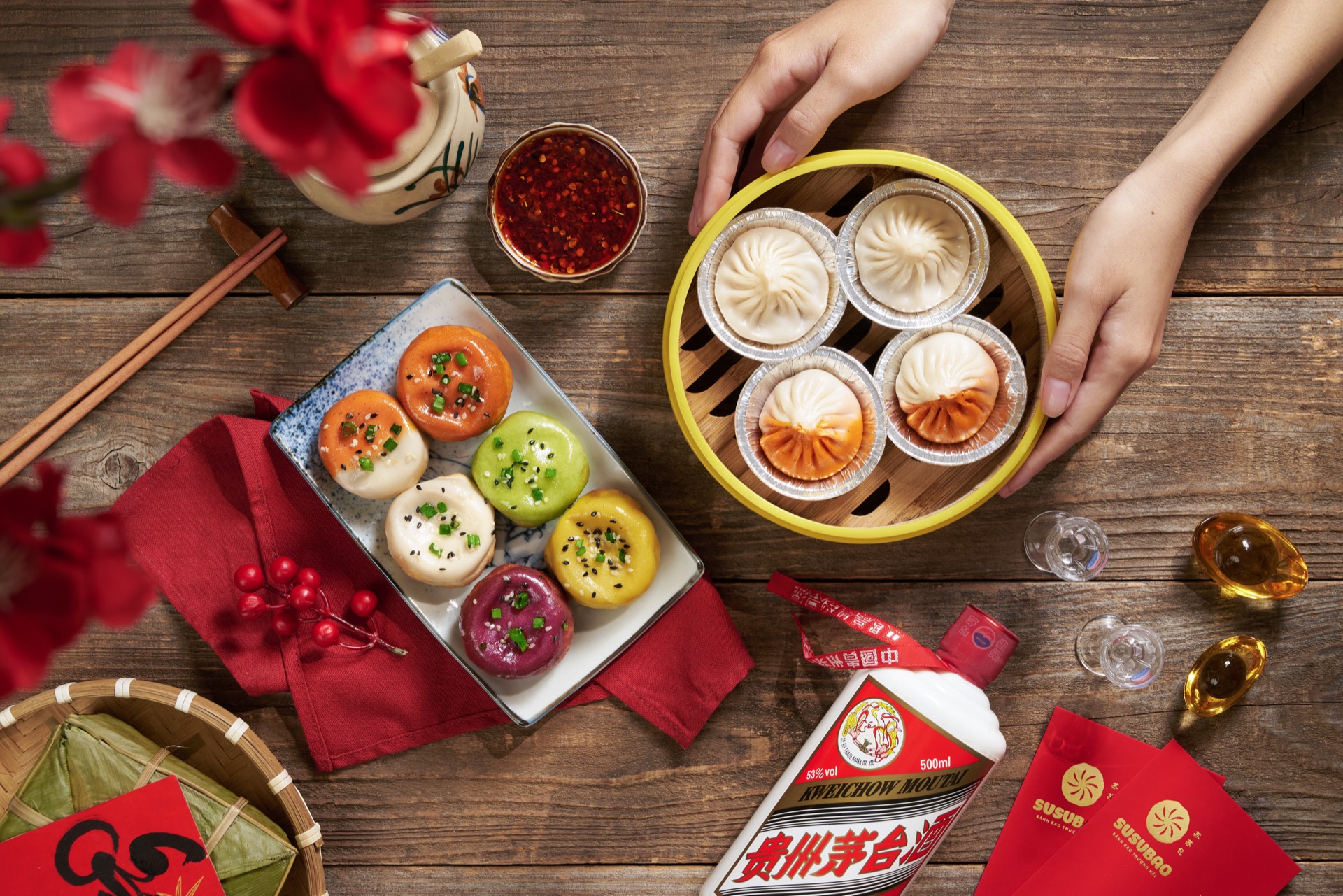
SuSuBao is a Shanghai-style bun and dim sum house, hand-making its dishes fresh every day since we opened in 2021, led by a Shanghai-born founder. You can find us in Ho Chi Minh City at 167-167A Nguyen Thi Minh Khai in District 1 and in Phu Nhuan, in Hanoi in the Dong Da and Cau Giay districts, and in My Tho and Bien Hoa. Browse the full menu, see more about us on our English home page, or order online at susubao.vn. Come hungry, and let the kitchen do the rest.